Fire Safety for Children Ages 0–5: A Practical Guide for Parents and Caregivers
Child Safety | A free public-awareness resource by PICCHI BABY
Information checked: 23 October 2026 | Estimated reading time: 10–12 minutes
Emergency in Bangladesh: Call 999 for national emergency assistance or 102 for Fire Service. If there is a fire, get out safely and stay out. Seek immediate medical help for breathing difficulties, unconsciousness, severe burns or possible smoke-inhalation injury. [8, 9]
Imagine a toddler sleeping in a bedroom when smoke appears in the kitchen. Does every adult who looks after that child know what to do? Protecting young children from fire requires more than teaching them not to play with matches. Families need prevention, early warning, a practiced escape plan and basic first-aid knowledge.
The World Health Organization (WHO) emphasizes that burn injuries can be prevented through safer surroundings, appropriate equipment, smoke alarms and access to prompt first aid. UNICEF highlights particular risks from hot liquids and cooking equipment in homes with young children. [1, 2]
Five essential messages
- Plan for an adult to rescue children younger than five. They cannot be relied on to get themselves out of a fire. [3, 4]
- Install working smoke alarms and practice a family fire escape drill at least twice a year. [5, 6]
- Leave the building and stay out. Once safely outside in Bangladesh, call 999 or 102. [2, 8, 9]
- Stop–Drop–Roll applies when clothing catches fire, not as a general response to a house fire. [7]
- For a smaller thermal burn, cool the area promptly with cool running water for approximately 20 minutes, if safe; keep the rest of the child warm. Serious burns and breathing problems require urgent medical care. [1, 2, 10]
1. Why do children ages 0–5 need special protection?
Young children explore their surroundings, may not recognize hazards, and may be frightened or hide during an emergency. Babies and toddlers cannot escape unaided. The American Academy of Pediatrics states that families with children younger than five must plan for an adult to rescue them rather than assuming they can rescue themselves. [3]
The plan must be known to every person who regularly cares for the child: parents, grandparents, relatives, babysitters, domestic caregivers and day-care staff. Assign a backup adult if the usual caregiver is unavailable.
2. Make everyday spaces safer
Kitchen and dining area
Scalds from hot tea, milk, soup, water, steam or cooking oil can cause serious injury even without a house fire. [2]
- Keep cups of hot liquids, pans and pots away from edges and out of children's reach.
- Prefer rear stove burners and turn pan handles inward while cooking.
- Keep electric-kettle cords out of reach; avoid tablecloths that a child can pull.
- Never carry a young child and a hot drink or hot pan at the same time.
- Supervise children around cooking appliances, heaters and other hot surfaces.
Bath water
Test and mix bath water before placing a child in it. UNICEF describes 37–38°C as a suitable bath-water temperature and advises controls to prevent dangerously hot tap water. Never leave a young child unattended in a bath. [2]
Matches, lighters, candles and electrical hazards
Store matches, lighters, candles and flammable substances securely and out of reach. Avoid damaged wiring, overloaded sockets and faulty electrical equipment. Keep hot irons, kettles and heaters inaccessible, including while cooling after use. Have suspected gas or electrical defects inspected by qualified personnel. [2, 4]
3. Install and maintain smoke alarms
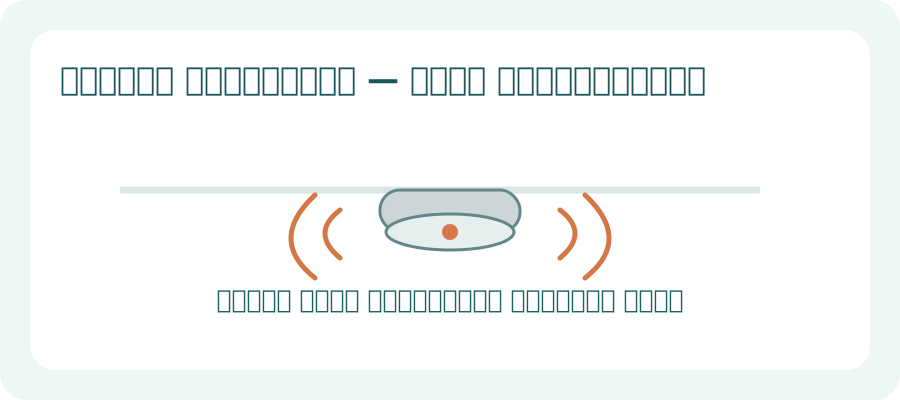
A smoke alarm can warn people of developing smoke and fire. U.S. Fire Administration guidance recommends alarms inside every bedroom, outside each separate sleeping area, and on every level of the home. Interconnected alarms are preferable when practical. [5]
- Test alarms monthly with the test button.
- Follow the manufacturer's battery and maintenance instructions.
- Replace standard smoke alarms approximately every 10 years.
- Do not disable the alarm or leave its battery removed.
- Young children may not wake to the alarm; assign an adult to wake and assist them. [5, 6]
4. Write a family escape plan
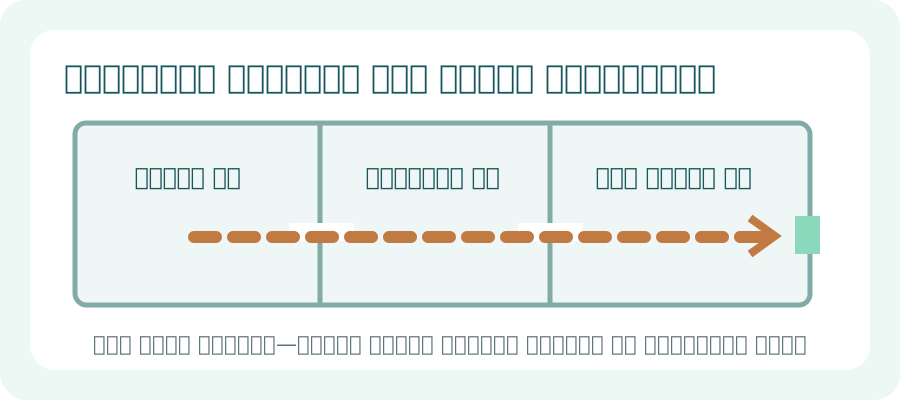
Identify routes. Draw a simple floor plan and find two realistic, safe ways out of each room where possible. A high-rise window with fixed security grilles is not automatically a usable escape route.
Assign adults. Identify who will wake, carry or lead each young child outside, and choose a substitute caregiver.
Choose a meeting place. Pick a safe spot outside the building where everyone can be counted.
Check exits. Know the nearest protected stairs and building emergency arrangements. Report locked, obstructed or cluttered exits to the building manager.
Practice. Conduct a calm family fire escape drill at least twice a year. Children should practice with adults, not be frightened by realistic flames or smoke. [3, 4, 6]
5. If a fire starts, what should a caregiver do?
Leave promptly. Take the child and choose the safest accessible exit. Do not collect belongings or toys.
Check closed doors. Before opening a door, feel it for heat with the back of your hand. If it is hot or heavy smoke is visible beyond it, do not open it; find another safer way out.
Stay low when necessary. If a route contains some smoke, stay low beneath it and move toward safety. Do not force your way into heavy smoke or treat a damp cloth as reliable protection from toxic gases.
Use safe stairs. Do not use an ordinary elevator during a fire. Follow any legitimate building or firefighter instructions.
Call after escaping. From a safe outdoor location, call Bangladesh emergency services 999 or 102. Tell them the address, floor, and whether anyone is missing.
Stay out. Do not re-enter a burning building. Tell firefighters if someone remains inside. [2, 3, 6, 8, 9]
If escape is blocked
Remain in the safest available room with the child and close the door. Use towels or other cloth to reduce smoke leaking through gaps. Call emergency services and give the precise apartment and floor. Signal from a window if safe, but close it if opening it makes the smoke worse. Never jump from a high window or balcony with a child. [3, 11]
6. Stop–Drop–Roll: Only when clothing is on fire
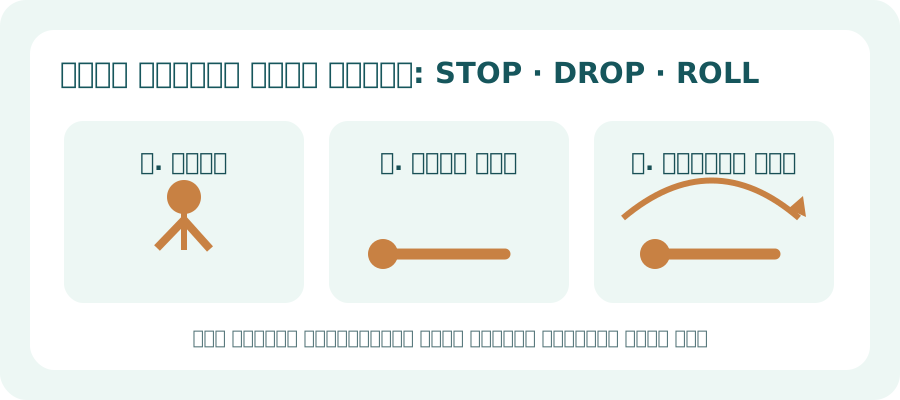
If a child's clothing catches fire:
STOP: Do not run.
DROP: Lie on the ground and cover the face.
ROLL: Roll from side to side until the flames go out.
A baby or small toddler cannot perform this reliably. A nearby adult should extinguish flames safely using water or an appropriate blanket, then provide burn first aid and arrange medical assessment.
This technique is not the response to a smoke alarm or to a fire elsewhere in the home. When clothing is not on fire, follow the escape plan. [7]
7. First aid if a child is burned or scalded
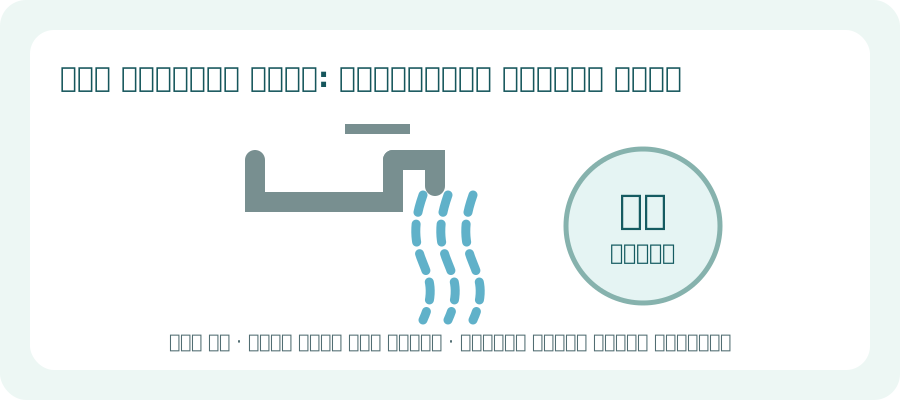
For a thermal burn, including flames or hot drinks:
- First protect yourself and the child and stop contact with the heat source. With electrical hazards, do not touch someone still in contact with live current.
- For a smaller burn, if safe, immediately cool the affected area with cool running water for about 20 minutes. This is consistent with the WHO fact sheet updated 21 October 2026. Keep the rest of the child's body warm. Do not delay urgent treatment for a large or serious burn.
- Remove rings, tight items or loose clothing near the burn, but do not pull away clothing stuck to injured skin.
- Once cooled, loosely cover the area with a clean, non-adherent dressing or cloth.
- Do not apply ice, toothpaste, oil, butter, turmeric or other household preparations. Do not deliberately burst blisters.
- Seek medical advice for a child with a burn; obtain emergency medical care whenever there are warning signs. [1, 2, 10, 12]
Important: Infants can lose body heat quickly. Significant burns, inhalation injury, or difficulty breathing require prompt professional care rather than prolonged first aid at home. Chemical and electrical burns need specific precautions and medical evaluation.
When is urgent medical care especially important?
Seek emergency assessment for burns affecting the face, neck, hands, feet, genitals or joints; large or deep burns; white, brown, black or numb-looking skin; electrical or chemical burns; suspected smoke inhalation; breathing trouble; loss of consciousness; or unusual drowsiness.
The American Burn Association states that all pediatric burns may benefit from specialist burn-center referral, depending on circumstances. Parents should have a low threshold for seeking medical advice. [12]
8. What should children learn at different ages?
| Age | Appropriate introduction | Important limitation |
|---|---|---|
| 0–1 year | Caregiver rescue planning and a safer environment | No expectation of self-rescue |
| 1–2 years | Simple cues: “hot”, “don't touch”, “come to me” | Do not depend on compliance |
| 2–3 years | Tell an adult about smoke or flames; hold an adult's hand | No independent evacuation responsibility |
| 3–5 years | Recognize alarms, do not hide, follow an adult, simple drills, an introduction to Stop–Drop–Roll | Active adult help remains essential |
These age bands are practical suggestions, not an official WHO training schedule. AAP advises that children aged three and older can begin to learn basic fire-safety behavior. The U.S. Fire Administration and Sesame Workshop have developed fire-safety education for ages three to five. [3, 4, 13]
Teach preschool children a few memorable sentences: “Don't play with fire”; “Tell an adult if you see smoke”; “Don't hide”; “Go outside with a grown-up”; “Don't return for toys”; “Stay outside.” Use stories, pictures and calm role-play—never real smoke, flames or frightening simulations.
9. A sample 15-minute family practice
This is a suggested activity, not a mandatory 15-minute standard.
Minutes 1–5: Identify the child's room, exit routes, meeting point and meaning of the smoke-alarm sound.
Minutes 6–10: Rehearse carrying or guiding the child safely along the chosen route and discuss a backup route.
Minutes 11–15: Meet outside, account for everyone, review the emergency telephone numbers, and reinforce staying outside.
NFPA recommends at least two fire escape drills each year. During practice, find out whether your children wake when the alarm sounds. If not, make a responsible adult part of the waking and rescue plan. The goal is learning—not frightening a sleeping child. [6]
10. Make sure substitute caregivers know the plan
When a different adult is responsible for your child, share the full address, building and floor; emergency numbers 999 and 102; safe exit routes; the child's room; who must help them; and the outdoor meeting point. Share important medical information as relevant. Never leave a young child alone at home. Ask your preschool or day-care center about its evacuation and child-assistance arrangements. [3, 4]
11. Five dangerous misconceptions
“My toddler will find the door if there is a fire.” No. A responsible adult must be assigned to help.
“A wet cloth makes thick smoke safe to enter.” No. It is not reliable protection from toxic gases.
“Ice is the best first aid for burns.” No. WHO advises against ice. [1]
“Stop–Drop–Roll is for every house fire.” No. It applies when clothing is burning. [7]
“Once outside, I can return for a favorite toy.” No. Stay out and tell firefighters if someone is inside. [3, 6]
12. Family safety checklist
- Working smoke alarms are in the recommended locations.
- We tested our alarms this month.
- An adult is assigned to wake and carry or guide each young child.
- A backup caregiver knows the plan.
- Safe main and alternative exits are identified where possible.
- Exit stairs and routes are free from obstruction.
- Our family has an outdoor meeting place.
- Caregivers know our full address and emergency numbers.
- Hot drinks, cooking equipment and matches are out of children's reach.
- We have checked electrical, heating and other household hazards.
- We practice a family escape drill at least twice yearly.
- At least one caregiver plans to learn pediatric first aid and CPR in person.
13. Where can caregivers train in Bangladesh?
Bangladesh Fire Service and Civil Defence: Fire safety information and emergency arrangements: https://fireservice.gov.bd/
Bangladesh Red Crescent Society: Basic First Aid courses include CPR, burns, choking, unconsciousness and other emergency skills. Confirm that age-appropriate infant and child CPR is included before enrolling: https://bdrcs.org/first-aid-training/
Frequently asked questions
Should a two-year-old practice a fire drill? They can participate in gentle, age-appropriate familiarization, but they must never be responsible for independent evacuation.
Can a three-year-old learn Stop–Drop–Roll? Children can begin to understand it through calm practice, but adults must still help in an actual emergency.
Should I fight a fire or get my child out? Prioritize protecting life and escaping safely. Never attempt firefighting without appropriate training, equipment and a safe exit.
How long should cool water be used for a burn? Around 20 minutes for a smaller thermal burn when safe, while preventing hypothermia. Serious burns and breathing problems need urgent medical attention. [1, 10]
Do grandparents, babysitters and domestic caregivers need to know the plan? Yes. Anyone caring for the child must know what to do.
A final message to families
Fire safety is not one lesson: it is a family habit. For children ages 0–5, their most important protection is a prepared, informed and responsible adult. Small steps taken today—keeping hot things out of reach, checking alarms, planning rescue responsibilities and practicing a safe exit—can make a meaningful difference.
This free article is a public-awareness initiative by PICCHI BABY, not a sales promotion. Please share it with parents and caregivers who may benefit.
Medical and safety disclaimer: This educational article does not replace a clinician, emergency service, trained firefighter, or hands-on first aid/CPR course. PICCHI BABY does not claim WHO, UNICEF or any other agency endorses this article.
References and original guidance
[1] WHO — Burns (updated 21 October 2026). https://www.who.int/news-room/fact-sheets/detail/burns
[2] UNICEF Parenting — Burns, scalds and fire-related injuries. https://www.unicef.org/parenting/safety/burns-scalds-fire-safety-tips
[3] American Academy of Pediatrics — Fire Safety: Protecting Your Family from a Home Fire. https://www.healthychildren.org/English/safety-prevention/all-around/Pages/Fire-Safety.aspx
[4] U.S. Fire Administration — Fire Safety for Children. https://www.usfa.fema.gov/prevention/home-fires/at-risk-audiences/children/
[5] U.S. Fire Administration — Smoke Alarms. https://www.usfa.fema.gov/prevention/home-fires/prepare-for-fire/smoke-alarms/
[6] National Fire Protection Association (NFPA) — How to Make a Home Fire Escape Plan. https://www.nfpa.org/education-and-research/home-fire-safety/escape-planning
[7] NFPA — Learn Not to Burn: Know When to Stop, Drop and Roll. https://content.nfpa.org/-/media/Project/Storefront/Catalog/Files/Home-Fire-Safety/Lesson-plans/lntblevel1stopdroproll.pdf
[8] Bangladesh Police — Hot Line Number. https://www.police.gov.bd/en/hot_line_number
[9] Bangladesh Fire Service and Civil Defence — Official Website. https://fireservice.gov.bd/
[10] NHS — Burns and scalds (reviewed 31 March 2026). https://www.nhs.uk/conditions/burns-and-scalds/
[11] NFPA — High-rise Apartment & Condominium Safety. https://www.nfpa.org/-/media/Project/Storefront/Catalog/Files/Safety-tip-sheets/HighRiseSafetyTips.pdf
[12] American Burn Association — Burn Patient Referral Guidelines. https://www.ameriburn.org/burn-care-team/resources/guidelines-for-burn-patient-referral
[13] U.S. Fire Administration — Sesame Street Fire Safety Program for Preschool Children. https://www.usfa.fema.gov/prevention/fire-officials/public-educators/sesame-street/
[14] Bangladesh Red Crescent Society — First Aid Training. https://bdrcs.org/first-aid-training/